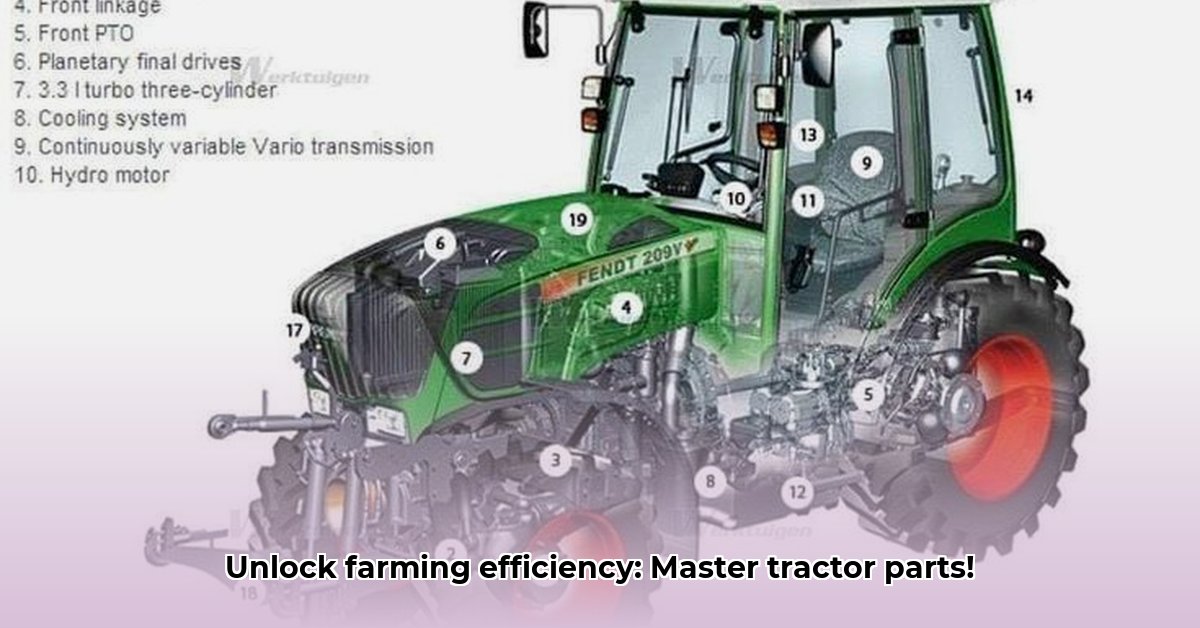
Understanding Tractor Parts Diagrams: A Key to Sustainable Farming
This guide provides a practical understanding of tractor parts diagrams, empowering you to improve your farming efficiency and minimize your environmental impact. Mastering your tractor isn't just about knowing how to drive; it's about understanding how each component contributes to optimal performance and reduced resource consumption. This knowledge directly translates into cost savings and a lighter environmental footprint. For detailed diagrams, check out this helpful resource: Mahindra Tractor Parts Diagrams.
Decoding Your Tractor's Engine: The Heart of the Operation
The engine is the powerhouse of your tractor. A well-maintained engine ensures efficient fuel use and minimizes harmful emissions. Regular maintenance, guided by your tractor's parts diagram, is crucial. Key components to monitor, readily identified on your diagram, include the oil filter, fuel injectors, and spark plugs. These routine checks help prevent costly breakdowns and ensure maximum operational efficiency.
Transmission: Power Transfer for Optimal Efficiency
The transmission system efficiently routes power from the engine to the wheels. Selecting the appropriate gear for each task is critical for minimizing fuel consumption and engine strain. Your parts diagram will clearly show the clutch, gears, and shafts. Understanding these components enables you to optimize your tractor's performance and reduce wear and tear. Proper gear selection directly impacts fuel efficiency – a key factor in sustainable agriculture.
Hydraulics: Powering Attachments for Efficient Tasks
The hydraulic system provides the power for essential attachments like loaders and tillers. This complex system of pumps, valves, and cylinders requires attention to detail. Your parts diagram highlights the hydraulic reservoir, lines, and other vital components. Maintaining proper hydraulic fluid levels prevents issues and ensures smooth operation, further bolstering fuel efficiency.
PTO (Power Take-Off): The Link to Your Implements
The PTO shaft transmits power from the engine to implements like mowers and balers. This is a crucial link for productive farming. Your parts diagram will clearly show the PTO shaft, its engagement mechanism, and its connection points to implements. A thorough understanding simplifies maintenance and troubleshooting, reducing downtime and maximizing productivity.
The Electrical System: Ensuring Proper Functionality
The electrical system, while less visually prominent, is crucial for various tractor functions. Regularly check the battery, wiring, and other components. Your parts diagram will guide you to the fuse box, battery, starter, and alternator. Proactive maintenance avoids costly repairs and ensures reliable performance, contributing to overall operational efficiency.
Wheels and Tires: Impact on Soil and Fuel Efficiency
Appropriate tires are essential for fuel efficiency and soil health. Improper tire use can lead to increased soil compaction, fuel waste, and reduced productivity. Your parts diagram pinpoints tire size and placement, emphasizing the importance of proper inflation and tread patterns. Using the right tires is a fundamental aspect of sustainable farming practices.
Regular Maintenance: Proactive Care for Long-Term Benefits
Preventative maintenance significantly extends the life of your tractor and minimizes costly repairs.
- Weekly: Check all fluid levels (engine oil, coolant, hydraulic fluid, transmission fluid) and clean the tractor.
- Monthly: Inspect belts, hoses, and wiring; replace worn components and tighten loose parts.
- Annually: Schedule a professional inspection, especially for complex systems.
- As Needed: Address any unusual noises or issues immediately; avoid delaying repairs.
These routine checks drastically increase your tractor's lifespan and reduces the environmental impact associated with frequent breakdowns and replacements.
Choosing the Right Tractor: Matching Size to Needs
Tractor size directly impacts fuel efficiency and soil compaction. Larger tractors may seem advantageous, but they consume more fuel and compact soil more severely. Smaller tractors, better suited for smaller farms or specific tasks, consume less fuel and reduce soil compaction. Careful consideration of your farm’s size and operational needs is essential when selecting a tractor.
Utilizing Parts Diagrams for Efficient Repairs
Parts diagrams are invaluable during repairs. They provide clear visual guidance, accelerating the repair process and minimizing downtime. Having a readily available diagram saves considerable time, money, and frustration during repairs and maintenance.
Technological Advancements in Sustainable Farming
Precision agriculture technologies like GPS-guided systems and variable rate application are revolutionizing sustainable farming. These tools enhance efficiency and improve environmental stewardship, reducing fuel consumption and optimizing input usage. Integrating such technologies with your tractor provides significant opportunities for economic and environmental benefits.
By understanding your tractor's parts diagram and implementing these strategies, you’ll become a more efficient and environmentally responsible farmer. This knowledge empowers you to maximize your resources, minimize waste, and contribute to a more sustainable future for agriculture.